Utility Scale Solar in the Low Country
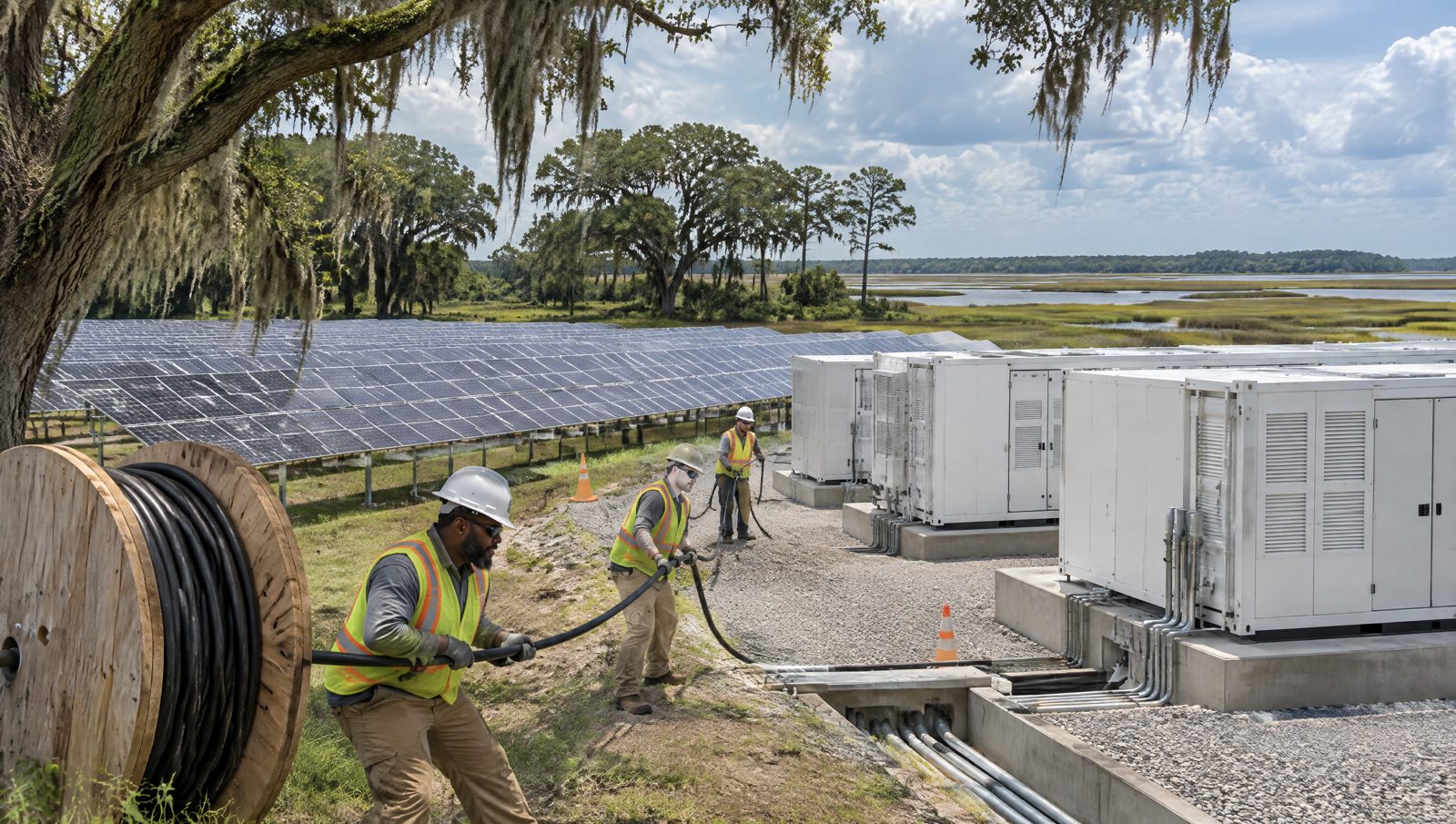
The South Carolina Low Country is known for marshes, rivers and Charleston's harbor, but it's also becoming a home for solar and battery storage. According to the U.S. Energy Information Administration, developers have reported about 450 megawatts of new solar and 300 megawatts of battery storage planned through 2029 in the Low Country counties, including a large storage project in Berkeley County and new solar in Georgetown, Williamsburg and Colleton counties. Building on the coast takes a crew that respects water, wind and schedule.
STG Solar has installed 1.79 gigawatts of utility scale solar since 2015, across more than 64 projects, including solar farms in South Carolina. We bring self-performing electrical, mechanical, medium voltage and fiber optic crews to projects across the Low Country.
Why the Low Country Is a Demanding Place to Build Solar
Water is everywhere. The Low Country is flat and low, with a high water table, wetlands and soft ground that can turn to mud after a single storm. Grading, drainage, pile design and equipment access all have to account for wet conditions, and crews need realistic production plans for soft soil.
Hurricanes are part of life on this coast. Hurricane Hugo in 1989 showed how much damage a major storm can do, and tropical systems still threaten every summer and fall. Equipment pads, conduit sealing, secure staging and a storm plan protect both the project and the crew.
Salt air and humidity are the quiet challenge. Coastal moisture speeds up corrosion, so proper terminations, sealing and hardware matter. Summer heat and humidity also make crew safety plans essential.
Our Utility Scale Solar Services in the Low Country
We self-perform the core trades on a solar farm, so you manage fewer subcontractors and fewer handoffs.
- Electrical: DC string wiring, combiners, home runs, inverters, AC collection, grounding and testing
- Mechanical: pile layout, fixed-tilt racking, single-axis trackers and module installation
- Medium voltage: collection cable, splices, terminations, transformers and MV cable testing
- Fiber optic: SCADA fiber installation, fusion splicing and OTDR testing
- Operations and maintenance and 24/7 emergency response after storms
We can take a full scope or add crews to support yours. As much or as little as you need.
Battery Storage and Commissioning
Battery storage is a big part of the Low Country's pipeline, with about 300 megawatts planned in Berkeley County alone. Our crews build the electrical side of BESS projects and support testing through energization. Learn more about our solar and BESS commissioning services.
Why EPCs and Developers Choose STG Solar
We may be one of the larger utility scale contractors in the Southeast, but we've kept our homegrown roots. Our core values are honesty, integrity and quality workmanship. That means we show up with the crew size we promised, we tell you early when something's off and we don't leave a punch list behind.
- We self-perform electrical, mechanical, medium voltage and fiber optic work
- We've built more than 64 utility scale projects in 10 years
- Our crews travel nationwide, with a main focus on the Carolinas, Virginia and Texas
- Our 24/7 Emergency Response Team is ready after hurricanes and tropical storms
- We test as we go, so the commissioning team gets clean records
How a Solar Project Works With STG
- Scope review. We walk the drawings, schedule and crew needs with your team. We generally recommend about 90 days of lead time.
- Mobilization. We staff the crew size the schedule calls for, set up laydown and get safety plans in place.
- Installation. Piles, racking or trackers, modules, DC and AC wiring, medium voltage and fiber, block by block.
- Testing as we go. Torque, polarity, insulation and continuity are checked and documented as each block finishes.
- Energization support. We work with the commissioning team and the utility through startup.
- Clean closeout. Test records, a closed punch list and a site ready for operations and maintenance.
Frequently Asked Questions
Which counties in the Low Country do you work in?
We work across coastal South Carolina, including Berkeley, Charleston, Dorchester, Colleton, Georgetown, Williamsburg, Beaufort and Jasper counties.
How do you build on wet, low ground?
We follow the engineer's drainage and pile design, plan equipment access for soft soil and schedule critical work around storms and high water.
Can you take only part of the scope?
Yes. Some clients hire us for the full electrical and mechanical scope. Others need medium voltage, fiber or extra crews to hold a schedule.
Do you build battery storage too?
Yes. We build the electrical side of battery storage projects, including storage paired with solar. See our BESS Systems page.
Can you repair hurricane damage?
Yes. Our 24/7 Emergency Response Team repairs storm damage on operating solar farms, from modules and racking to electrical, MV and fiber.
How do you protect equipment from salt air?
We install terminations, seals and hardware to the manufacturer's specs for the environment and check them carefully, since coastal moisture punishes shortcuts.
Build Your Next Solar Project With a Crew That Delivers
The Low Country is adding solar and storage, and its water and weather don't forgive shortcuts. STG Solar brings self-performing crews and gigawatts of utility scale experience to every project we take on.
Request a bid to talk about your project.