The Solar Blog
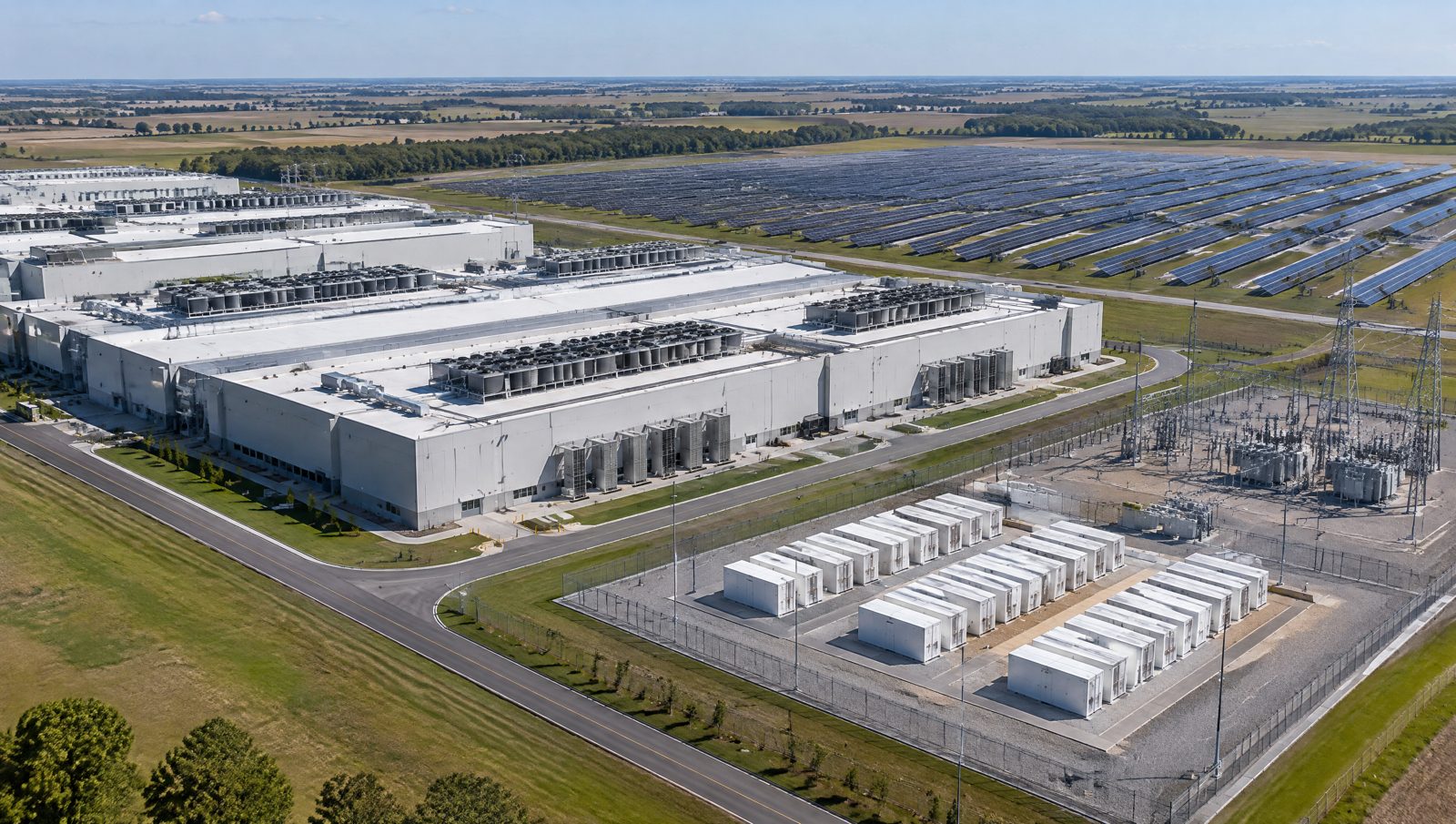
Solar and Battery Storage for Data Centers
Tuesday, November 24, 2026Every search, stream, cloud file and AI tool runs on a data center somewhere, and those buildings use a staggering amount of electricity. As artificial intelligence pushes demand even higher, data center developers are racing to find power that's fast to build, affordable and clean. More and more, that power comes from utility scale solar paired with battery energy storage.
For EPCs and developers, that's creating a new kind of project: solar and storage built to serve data center load. Here's why it's happening, how these projects work and what it takes to build them.
Quick Summary
- U.S. data centers are using a growing share of the country's electricity, and demand is expected to keep rising.
- Solar can be built faster than most other new power plants, and battery storage makes it available when the sun isn't shining.
- Data center power projects can be built on the grid, beside the campus or as part of a dedicated energy park.
- These projects demand heavy electrical, medium voltage and fiber work, plus careful commissioning.
- The biggest markets, including Northern Virginia, Texas and Georgia, overlap with today's busiest solar and storage regions.
Why Data Centers Need So Much Power
A large data center campus can use as much electricity as a small city, and it runs around the clock. Servers, networking gear and cooling systems all draw power every minute of the day, and AI computing uses far more power per rack than traditional servers.
That growth is showing up in national numbers. A 2024 report from Lawrence Berkeley National Laboratory for the U.S. Department of Energy found that data centers used about 4.4 percent of U.S. electricity in 2023, and estimated they could use between roughly 7 and 12 percent by 2028. Utilities in fast-growing markets are adding new generation as fast as they can, and some data center projects now wait years for grid connections.
That's why developers are looking at every option that can deliver power sooner, and solar plus storage is near the top of the list.
Why Solar and Storage Fit Data Centers
Speed
A utility scale solar farm can often be built in a year or less once permits and equipment are in place. Battery storage can be built even faster, since most of the equipment arrives factory-built. When a data center needs power in two or three years, not ten, that speed matters.
Cost and Clean Energy Goals
Large tech companies have set aggressive clean energy goals, and some aim to match their power use with carbon-free energy every hour of the day. Solar is one of the lowest-cost sources of new electricity, and it helps data center owners meet those goals while locking in long-term power prices.
Batteries Fill the Gaps
Solar produces power during the day. Data centers need it all night, too. Battery storage soaks up solar power in the daytime and delivers it after sunset, smooths out cloudy periods and helps the grid handle peaks. Batteries can also respond in fractions of a second, which supports grid stability as large new loads come online.
Grid-scale battery storage isn't the same thing as the backup batteries inside a data center's UPS system, which keep servers running for minutes during an outage. But both are part of the same push to make data center power reliable.
How Data Center Solar and Storage Projects Are Built
These projects come in a few common forms.
Grid-connected solar and storage. The project connects to the utility grid, and the data center buys its output through a long-term power purchase agreement. This is the most common setup today.
Projects beside the campus. Solar and storage are built on land next to or near the data center, sometimes sharing a substation, so power has a shorter path to the load.
Energy parks. Some developers plan large sites that combine data centers with dedicated generation and storage, designed together from the start.
In every case, the construction work looks like a large utility scale solar and storage project, with a few added demands. Schedules are tied to a data center opening date. Reliability expectations are high. And the electrical, communications and controls systems have to work flawlessly from day one.
The Construction Work Behind Data Center Power
For the field crews, data center power projects are electrical-heavy jobs:
- Electrical: DC and AC wiring, inverters, combiners, grounding and testing across large solar fields
- Battery storage: setting containers and power conversion systems, DC and AC cabling and controls
- Medium voltage: collection systems, transformers, switchgear and substation tie-ins that move large amounts of power to the load
- Fiber optic: SCADA and controls networks that let the owner, utility and data center operator see and manage the system
- Commissioning: testing every circuit, starting up equipment in a controlled order and handing off complete records
Because data center owners expect high reliability, quality control and documentation matter even more than on a typical project. A crew that tests as it goes and hands off clean records protects both the schedule and the owner's confidence.
Where Data Center Power Is Being Built
Data centers cluster where power, fiber, land and tax policy line up. Northern Virginia is the largest data center market in the world. Texas, especially Dallas-Fort Worth and Central Texas, is growing fast. Georgia, the Carolinas and Ohio are also adding large campuses.
Many of these regions are already busy solar and storage markets. Texas leads the country in planned solar and battery projects, and Virginia's clean energy law is driving new solar across the state. That overlap means the same crews building today's solar and storage projects are well placed to build the power behind tomorrow's data centers.
What EPCs and Developers Should Look For in a Subcontractor
If you're building solar or storage to serve a data center, look for a subcontractor that can show:
- Self-performed electrical, medium voltage and fiber work, so fewer handoffs slow the job down.
- Battery storage experience, including the codes that apply to storage, such as NFPA 855 and NEC Article 706.
- A strong safety program and safety records your team can review.
- Testing and documentation discipline, with clean records at handoff.
- The crew size and staying power to hold a schedule tied to a data center opening date.
How STG Solar Can Help
STG Solar has installed 1.79 gigawatts of utility scale solar since 2015 across more than 64 projects. Our crews self-perform electrical, mechanical, medium voltage and fiber optic work, build the electrical side of battery storage systems and support commissioning through energization. We work nationwide, with a main focus on the Carolinas, Virginia and Texas, including BESS construction in Dallas, TX and utility scale solar around Richmond, VA.
Frequently Asked Questions
Can solar really power a data center?
On its own, solar produces power only during the day. Paired with battery storage and the grid, solar can supply a large share of a data center's energy and help owners meet clean energy goals.
Is grid-scale battery storage the same as a data center's backup batteries?
No. A data center's UPS batteries keep servers running for minutes during an outage. Grid-scale battery storage stores large amounts of energy for hours and supports the grid and solar output.
Why are data center developers choosing solar and storage?
Solar and storage can be built faster than many other new power sources, they're cost-competitive and they help meet clean energy goals.
Where are these projects being built?
Mostly in the biggest and fastest-growing data center markets, including Northern Virginia, Texas, Georgia and the Carolinas.
Building the Power Behind the Digital World
Data centers are reshaping how the country plans and builds power, and solar plus storage is a big part of the answer. If you're planning solar or storage to serve data center load, choose a construction partner that knows how to build it right and on schedule.
Request a bid to talk about your project with STG Solar.