The Solar Blog
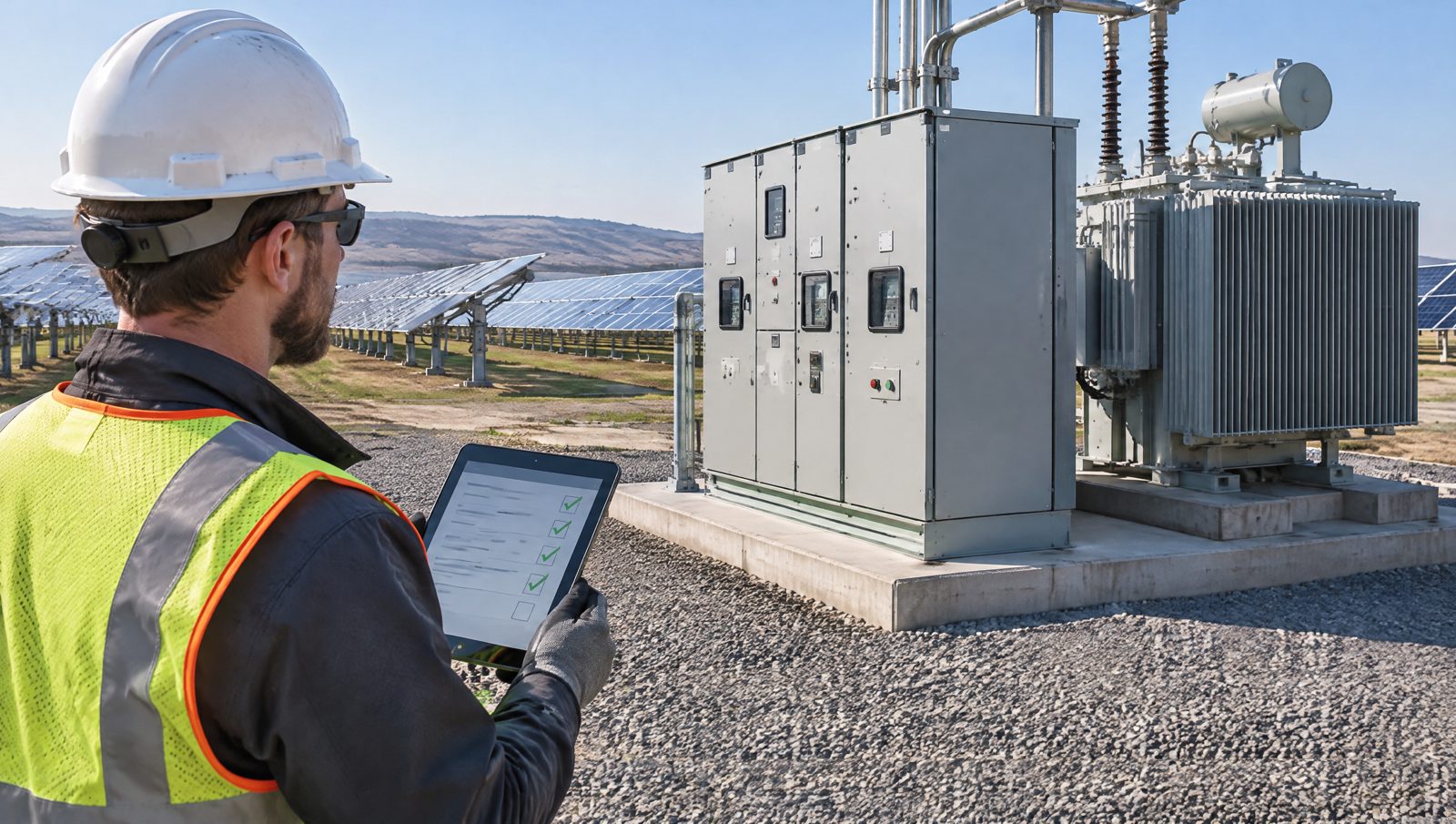
Solar and BESS Commissioning Checklist: Steps to COD
Monday, November 23, 2026Building a utility scale solar or battery site is only part of the job. Before it can earn a dollar, the project has to prove it's safe, wired right and ready to send power to the grid. That's commissioning, and it's where many schedules either hold or fall apart.
A missed test, a lost record or a failed witness test can push the commercial operation date (COD) back by weeks. This checklist walks through the main commissioning stages for solar and battery storage, so owners, EPCs and developers know what should happen and when.
Quick Summary
- Commissioning proves a site is built to design, safe to energize and ready for operation.
- It runs in stages: planning, construction checks, cold commissioning, hot commissioning, utility witness testing and handoff.
- Battery storage adds steps for the battery management system, controls and fire safety systems.
- Testing as work finishes, not all at the end, is the best way to protect COD.
- The job closes with complete test records and a closed punch list.
Stage 1: Plan Commissioning Before Construction Ends
Good commissioning starts long before anyone flips a breaker. The commissioning team should review the drawings, equipment manuals and interconnection agreement early.
Planning checklist:
- Build a commissioning plan with every test, its acceptance criteria and who signs off
- Confirm utility requirements and witness test dates
- Collect the inverter, transformer and battery makers' startup requirements
- Set up test record forms so results are logged the same way every time
- Line up any manufacturer field service visits
For battery projects, NFPA 855 calls for a commissioning plan, so this step isn't optional. It's also the cheapest place to catch a problem, because nothing has been energized yet.
Stage 2: Check Work as It's Installed
The best commissioning teams don't wait until the end. They walk the site during construction and check work as each area finishes.
Construction-phase checklist:
- Inspect cable routing, support and bend radius
- Verify torque on terminations and mark them
- Confirm labeling matches the drawings
- Check grounding connections and continuity
- Log any issues on a running punch list
Finding a bad termination while the trench is still open takes minutes. Finding it after backfill, or after energization, can take days.
Stage 3: Cold Commissioning
Cold commissioning covers every test done before the system is energized. It proves the wiring is correct and the insulation is sound.
Solar Cold Checks
- Polarity checks on every string, so no string is wired backward
- Open-circuit voltage (Voc) on every string, compared against design values
- Insulation resistance testing on DC and AC conductors
- Continuity and grounding checks on equipment and racking
- Visual inspection of modules, combiner boxes and inverters
- Tracker checks for movement, limits and stow position
Medium Voltage Cold Checks
- Insulation resistance and cable testing on medium voltage runs
- Termination and splice inspection
- Transformer checks, including ratio and insulation tests
- Phasing checks so every phase lands where the drawings say
Battery Storage Cold Checks
- Container and enclosure inspections against the maker's checklist
- DC cabling, polarity and torque checks between battery enclosures and power conversion systems
- Auxiliary power and HVAC wiring checks
- Fire detection, gas detection and suppression wiring checks
- Communications cabling checks for the battery management system and plant controller
Stage 4: Hot Commissioning
Hot commissioning starts energizing the system in a controlled order. This is when equipment comes alive for the first time.
Solar Hot Checks
- Energize the substation and medium voltage system in steps
- Backfeed transformers and inverters
- Start each inverter and confirm settings match the approved design and utility requirements
- IV curve tracing to confirm strings and arrays perform as expected
- Confirm tracker control and weather station data
Battery Storage Hot Checks
- Power up the battery management system and confirm cell and module readings
- Start the power conversion systems with the battery maker's field team
- Run charge and discharge tests to confirm the system responds
- Run capacity tests if the contract requires them
- Test fire and gas detection alarms and their tie-in to the controls
Communications and SCADA
- Point-to-point checks between field devices and SCADA, so every signal maps to the right tag
- Confirm fiber optic network health and redundancy
- Test the plant controller's control of solar and storage output
- Confirm the utility and grid operator can see the data they need
Stage 5: Utility Witness Testing and Energization
The utility, and sometimes the grid operator, will want to witness key tests before granting permission to operate. This date is usually set well ahead and is hard to move.
Witness testing checklist:
- Have every prior test finished, recorded and reviewed
- Confirm protective relay settings match utility-approved values
- Prepare for trip and protection tests the utility wants to see
- Have test equipment calibrated and calibration records ready
- Keep the crew and records on site during the visit
A clean witness test leads to permission to operate. A failed one can mean a new date, sometimes weeks out.
Stage 6: Performance Testing and Handoff
Once the site is energized and running, the last step is proving it performs and handing it off cleanly.
Handoff checklist:
- Complete any capacity or performance tests in the contract
- Close every punch list item and log the fix
- Deliver a complete set of test records
- Hand over as-built drawings and equipment documentation
- Brief the operations and maintenance team on open warranty items and known issues
A clean handoff means the O&M team starts with a full picture of the site, not a list of mysteries.
Common Commissioning Problems That Delay COD
Most delays come from a short list of causes:
- Tests saved for the end instead of done as work finishes
- Missing or incomplete test records
- Inverter or relay settings that don't match the utility-approved values
- SCADA points mapped wrong, so the utility can't see the right data
- Manufacturer field service visits scheduled too late
- Weather, with no float built into the plan
Each one is avoidable with a plan, a running punch list and a crew that knows the systems it's testing.
How STG Solar Approaches Commissioning
STG Solar has installed 1.79 gigawatts of utility scale solar since 2015 across more than 64 projects. Our crews self-perform electrical, mechanical, medium voltage and fiber optic work, so we know these systems from the inside out.
We can commission sites we built, sites built by others and battery storage projects alongside the equipment maker's team. Learn more about our solar and BESS commissioning services, or read why BESS construction is harder than solar.
Frequently Asked Questions
How long does solar commissioning take?
It depends on site size, design and how much testing was done during construction. Testing as work finishes shortens the final commissioning window a great deal.
What's the difference between commissioning and energization?
Energization is the moment power first flows. Commissioning is the full process around it: the checks before, the startup during and the testing after that proves the site is ready for operation.
Does battery storage commissioning take longer than solar?
Often it does, because batteries add the battery management system, power conversion startup, capacity testing and fire safety checks. The battery maker's field team is usually part of the process.
Can a different contractor commission a site than the one that built it?
Yes. An outside commissioning crew can review the records, retest what's needed and close open punch list items. Good records from the builder make that much faster.
Protect Your COD With a Commissioning Plan
Commissioning is the last gate between a finished site and a site that earns money. A clear plan, steady testing and a crew that knows solar and storage systems will keep your commercial operation date where it belongs.
Contact STG Solar to talk about commissioning your next solar or battery project.